By Plataforma “Don’t Forget Western Sahara”
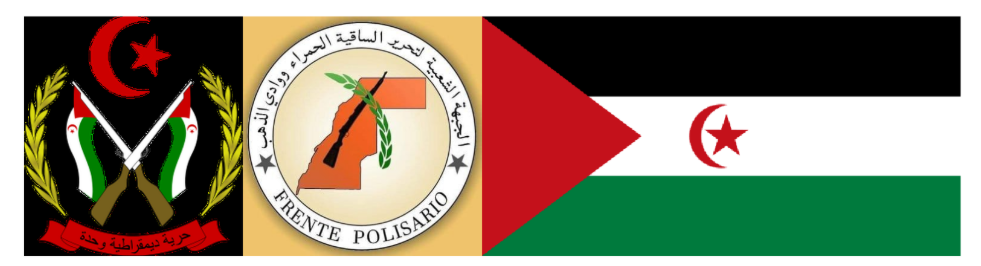
Half a century after the Moroccan-engineered Green March of 1975 —known among Sahrawis as the “Black March”— the Western Sahara conflict remains unresolved. The persistence of this territorial impasse is directly linked to Morocco’s refusal to engage the Polisario Front, internationally recognized as the legitimate representative of the Sahrawi people, as an indispensable party to any political process. This article argues that no durable or lawful settlement is achievable without the inclusion of the Polisario Front, in line with the principles of international law, decolonization, and the right to self-determination.
1. Introduction: Fifty Years After the March — The Conflict Endures
On 6 November 1975, the Kingdom of Morocco organized the Green March, mobilizing nearly 350,000 civilians into the territory of Western Sahara, which was then in the final phase of Spanish colonial withdrawal. Far from being a peaceful reclaiming, the operation marked the beginning of an occupation that persists to this day, leading to mass displacement and prolonged armed conflict. The International Court of Justice (ICJ) Advisory Opinion of 1975 unequivocally rejected Morocco’s sovereign claims over the territory, affirming the right of the Sahrawi people to self-determination.
Despite this legal clarity, Western Sahara remains on the UN list of Non-Self-Governing Territories, and Morocco continues to occupy large parts of it by force, erecting a 2,700 km military berm, transferring settlers, and exploiting natural resources in violation of international law, as confirmed by the Court of Justice of the European Union (CJEU).
2. Morocco’s Negotiation Strategy: Reframing the Conflict to Exclude the Sahrawi Party
Morocco has consistently sought to reshape the conflict by presenting it as a bilateral geopolitical dispute with Algeria, thus sidestepping the recognition of the Polisario Front as a core party. This strategy aims to avoid any negotiation centred on the right to self-determination and instead promote a unilateral “autonomy plan” within Moroccan sovereignty —a position rejected by both international jurisprudence and Sahrawi political representation.
Algeria has repeatedly rejected Morocco’s framing, maintaining that it is not the occupying power and cannot replace the Sahrawi people in decisions affecting the legal status of Western Sahara. As such, Algeria refuses to participate in forums designed to legitimize Rabat’s territorial claims, reaffirming that the conflict is one of decolonization and not regional rivalry.
3. The UN Framework: Reaffirmation of the Polisario Front as a Negotiating Party
The latest UN Security Council Resolution 2797 (31 October 2025) renews the mandate of MINURSO but, more importantly, reiterates the framework for a political process in accordance with the principles of the UN Charter. In a statement from Brussels on 5 November 2025, UN Personal Envoy Staffan de Mistura emphasized that the resolution “does not predetermine any outcome”, adding that “participating in negotiations does not imply accepting their final result”. His remarks reaffirmed that the Polisario Front is an explicitly recognized party to the process, invited —alongside Morocco, Algeria, and Mauritania— to contribute proposals and define the scope of direct or indirect talks.
These observations contradict official Moroccan narratives portraying the resolution as an endorsement of its autonomy proposal. Instead, the reaffirmed requirement for mutual consent, political feasibility, and self-determination underscores the legal centrality of the Sahrawi right to decide.
4. Persistent Illegality: The Material Effects of Occupation
Five decades after the Green March, Morocco maintains a de facto occupation that contradicts international legal norms. Through extractive activities in phosphates, fisheries, and renewable energy investments, as well as systematic repression of Sahrawi activists and journalists, Morocco violates the Fourth Geneva Convention and the principle of permanent sovereignty over natural resources, as upheld by the UN General Assembly.
The construction of the militarized berm, the presence of an estimated 160,000 Moroccan settlers, and the failure to organize the long-promised referendum demonstrate the structural nature of the occupation and its incompatibility with a “mutually acceptable political solution” grounded in legality.
5. Conclusion: No Legitimate Resolution Without the Polisario Front
A political solution to the Western Sahara conflict cannot emerge from external imposition or partial agreements that disregard the legal subject of decolonization. The exclusion of the Polisario Front —recognized by the UN General Assembly since 1979 as the representative of the Sahrawi people— not only invalidates any negotiation framework but ensures the perpetuation of conflict and instability in the Maghreb.
International legality, including the right to self-determination, is not optional. Either the Sahrawis are allowed to determine their own future, as mandated by international law, or the international community —by omission or complicity— will normalize a half-century-old violation of the UN Charter. No solution is possible without the Sahrawi people, and no representation of that people exists outside the Polisario Front.
Plataforma “Don’t Forget Western Sahara”
Descubre más desde No te olvides del Sahara Occidental
Suscríbete y recibe las últimas entradas en tu correo electrónico.