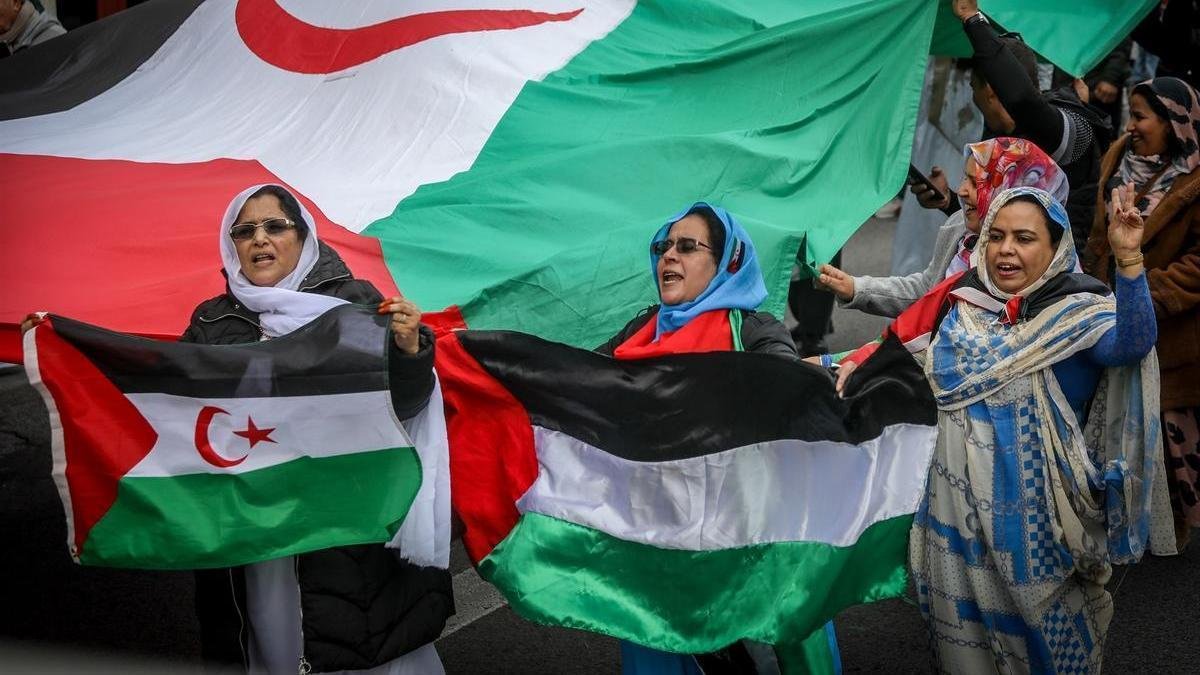
The adoption of Resolution 2797 (2025) by the UN Security Council, which extends the mandate of MINURSO until October 2026, has been presented by some international actors as a step toward “stability” and “development” in Western Sahara. However, a closer look shows that the resolution not only fails to resolve anything, but also entrenches an unjust status quo and prolongs an illegal occupation that has lasted for nearly half a century. Here are ten key arguments explaining why this resolution is, once again, an imposition that lacks both justice and respect for international law.
- It avoids the heart of the conflict: the right of the Sahrawi people to self-determination. Although the text mentions this right, it provides no concrete mechanism for its implementation and sets no timeframe for a referendum. It is an empty declaration that indefinitely postpones the exercise of this inalienable right. Worse still, it ignores the Sahrawi people’s clear demand to freely decide their political future.
- It introduces no real measures to end hostilities. War resumed on 13 November 2020 after Morocco violated the ceasefire in Guerguerat. The resolution neither fully acknowledges this fact nor proposes steps to de-escalate the military conflict. It doesn’t even call for compliance with previous agreements or the withdrawal of occupying forces from the Moroccan military berm.
- It upholds the Moroccan narrative by avoiding condemnation of the occupation. The text does not designate Western Sahara as an occupied territory nor Morocco as an occupying power, despite the rulings of the UN General Assembly and the 1975 ICJ advisory opinion. This silence only serves those who breach international law and seek to legitimize the occupation.
- It does not reform the structure of MINURSO. The mission remains the only UN peacekeeping operation in the world without a human rights monitoring mandate. There is no supervision, no protection, and no mechanism to report violations in the occupied territories. This absence of oversight de facto shields the abuses committed against Sahrawi civilians from accountability.
- It ignores the systematic plundering of the territory’s natural resources. It fails to address the illegal activities of Morocco and foreign companies exploiting phosphates, fisheries, renewable energy, and agriculture in Western Sahara, in violation of EU Court of Justice rulings. By ignoring this looting, the resolution normalizes a modern form of economic colonialism.
- It grants preferential treatment to the “Moroccan autonomy plan.” Even though the final wording softens the idea that it’s the “sole solution,” the resolution continues to describe autonomy under Moroccan sovereignty as a “serious and credible” option. This implicitly legitimizes a proposal rejected in full by the Frente Polisario, the UN-recognized representative of the Sahrawi people.
- It fails to promote equality between the parties. The Frente Polisario is treated abstractly as just a “party,” while Morocco is implicitly endowed with privileged status. The resolution does not require the occupying power to negotiate in good faith or abandon its unilateral attempts to impose a settlement. This imbalance makes any just and lasting solution impossible.
- It renews the mandate without critical reassessment. Despite decades of failure, no evaluation of MINURSO’s mandate is requested. The mission is normalized as a conflict-management tool rather than a conflict-resolution instrument. This institutional inertia entrenches the occupation and trivializes the absence of real political progress.
- It avoids placing real pressure on external actors. The resolution does not mention the destructive impact of unilateral actions such as the United States’ 2020 recognition of Moroccan sovereignty. Nor does it address the complicity of European states and institutions in signing illegal agreements that exploit resources from a non-self-governing territory.
- It perpetuates an ineffective diplomatic formula devoid of concrete proposals. The text calls for more reports, meetings, and “goodwill,” as if fifty years of broken promises had no consequences. This bureaucratic routine only leads to impotence and growing frustration among a people still denied their fundamental rights.
Conclusion
Far from resolving the conflict, this resolution once more buries Sahrawi rights under hollow diplomatic language. The UN simply extends a mission without the tools or goals necessary for real change. As the Frente Polisario has reaffirmed, the Sahrawi people will continue to defend their inalienable right to freedom and independence by all legitimate means, as long as the international community keeps turning a blind eye.
Platform “Don’t Forget Western Sahara”
Descubre más desde No te olvides del Sahara Occidental
Suscríbete y recibe las últimas entradas en tu correo electrónico.