From Western Sahara to its relations with Spain, Rabat appears to have learned a dangerous lesson: political pressure can produce results, while international criticism rarely carries enough consequences to force a change of course.
Veteran Moroccan journalist Ali Lmrabet recently argued that the Moroccan regime feels increasingly emboldened by the support it receives from the United States and Israel. He was speaking primarily about repression and the shrinking space for dissent inside Morocco, but his observation also offers a useful way of looking at Rabat’s behavior beyond its borders.
Morocco is not immune to criticism. It faces unfavorable court rulings, international resolutions and political condemnation. The problem arises when a government repeatedly discovers that those reactions do not carry enough political or economic cost to make it reconsider its behavior. Over time, criticism can become something to endure rather than something that forces change.
Western Sahara is perhaps the clearest example. The territory remains on the United Nations list of Non-Self-Governing Territories, and the Sahrawi people’s right to self-determination remains part of the UN framework. Yet Morocco has spent decades trying to transform its control of most of the territory into internationally accepted sovereignty.
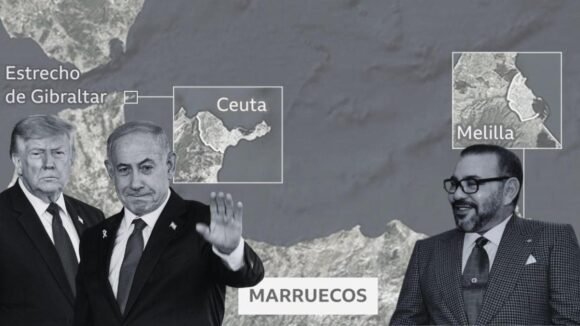
The support of powerful allies has strengthened that strategy. In 2020, President Donald Trump recognized Morocco’s claim of sovereignty over Western Sahara, departing from the position maintained by the United Nations. Israel later recognized the Moroccan claim as well. For Rabat, these decisions were not simply diplomatic successes. They suggested that the legal status of Western Sahara could remain unresolved while important governments gradually moved closer to Morocco’s preferred political outcome.
Spain provides another revealing example. In 2022, Prime Minister Pedro Sánchez changed Madrid’s position and described Morocco’s autonomy proposal for Western Sahara as the “most serious, realistic and credible” basis for resolving the conflict. The shift was presented as the beginning of a more stable relationship with Rabat after the previous crisis in Ceuta.
Four years later, another major crisis in Ceuta raises an uncomfortable question. If Spain made such an important concession on Morocco’s main strategic priority in the hope of securing stability, and that did not put an end to Moroccan pressure, what incentive does Rabat have to stop using that pressure?
The answer may be that it has very little incentive if experience suggests that the strategy works. Morocco obtained the Spanish shift on Western Sahara without assuming a permanent obligation to moderate its behavior. What Madrid regarded as an investment in stability could instead have taught Rabat that pressure produces political gains.
Washington adds another dimension. Morocco spends millions of dollars on lobbying and public affairs in the United States at a time when congressional initiatives are targeting the POLISARIO Front and reinforcing arguments favorable to Moroccan policy on Western Sahara. This does not mean that Morocco buys political decisions, but it does show how seriously Rabat works to shape the political environment in which those decisions are made.
That is why Lmrabet’s idea is worth considering beyond Morocco’s domestic politics. A government that repeatedly sees pressure rewarded and international criticism absorbed without major consequences may gradually become convinced that strong allies provide enough protection to keep pushing the limits.
That may be what feeling untouchable ultimately means.
¿Lees habitualmente NO TE OLVIDES DEL SÁHARA OCCIDENTAL?
Añádenos como fuente preferida en Google para encontrar más fácilmente nuestras publicaciones.
⭐ Añadir NO TE OLVIDES DEL SÁHARA OCCIDENTAL como fuente preferida